
Sometimes in the process of powder painting, troubles arise when the final coating has various…
Which metal degreaser to choose
Powder paint is very exacting on the quality of the surface to be painted. On the fat, oils, dust, scale and rust of the powder simply will not settle.
Therefore, the main thing in painting metal is cleaning. But cleaning alone will not give the proper quality of the painted part. The product also needs to be degreased. It is necessary for the final removal of dust and dirt, oils and fats. And yet degreasing provides good adhesion of metal and paint.
When choosing a degreaser for metal, pay attention to the composition, it should be free of toxic elements, the ability to remove dirt, oil and grease, as well as ease of use.
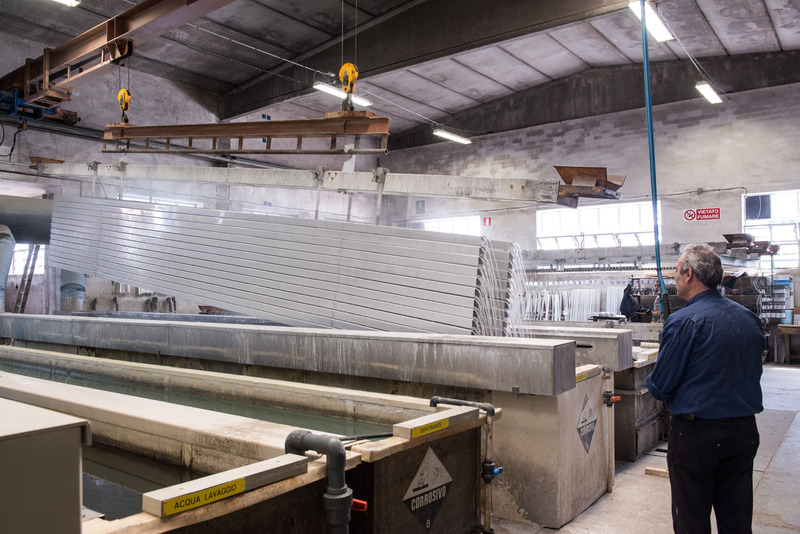
Methods of degreasing
There are several ways to prepare the surface for painting:
- Sandblasting
- Ultrasonic
- Electrochemical
- Chemical
Chemical solvents are organic, aqueous and emulsion. Organic degreasers are explosive and fireproof, but they cope with the removal of dirt quite quickly. However, they are effective only when the degree of contamination is small. They also do not cope with mineral contaminants and abrasive materials. The most common organic degreasers are white spirit, gasoline and chlorinated materials.
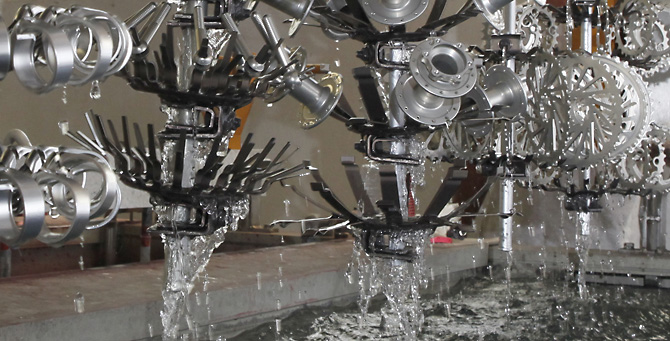
Alkaline and acidic water degreasers are safe and environmentally friendly. They clean the pollution well. But after cleaning, the surface must be treated for corrosion. After working with them it is necessary to wash the metal with water.
Emulsion degreasers cope with the most difficult pollutions and degrease those surfaces that the two previous options cannot. They are mixed with both organic and aqueous solvents.
Small products of complex shape can be degreased in special tubs with an ultrasonic field. Ultrasonic waves create bubbles in the water that affect the pollution by pulsating motions. But it is not advisable to degrease large elements.
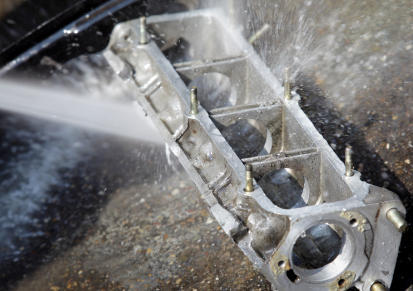
Electrochemical cleaning technology involves the use of gas bubbles that are formed on the electrodes. Consumption of chemicals thus decreases, and the level of purification becomes noticeably better.
Applying degreaser for metal painting
Apply a degreaser using a cloth or napkin. After the time indicated on the degreaser, it is washed with a cloth. It should be lint-free, otherwise there will be a lot of hair on the product. And then it will be difficult to remove them.
It is necessary to degrease the metal immediately after grinding.
Do not touch the hands or allow the exposed surface to come into contact with foreign objects.
The quality of degreasing can be checked using a white sheet of paper. If you attach it to the metal, it will retain all the substances that have not washed away. The presence of fats on the surface can be checked with a drop of water. If you drip on well-skimmed metal, the water will flow out. And if the surface is poorly treated, then the water will settle into the ball.
The metal should be painted immediately after degreasing. Because if it lays down slightly, it will again have dust and rust that need to be removed again.
Safety measures
Fats in the composition have substances that can be harmful and even dangerous to people who work with them. Therefore, it is important to take precautions when handling these materials:
- Work with a metal degreaser before painting only in well-ventilated areas with working ventilation.
- There should be no fire source near the workplace.
- There should be good bright light in the room.
- Be sure to wear goggles, a respirator, and a tarp or at least an apron.
Do not allow degreasers to enter affected areas.
It is especially important to follow these guidelines if you need to degrease aluminum. It can be explosive when exposed to some degreaser.
Consumption of degreasers on 1m2 on metal depends on the degree of contamination and the means selected for processing. Therefore, to determine exactly how much money will go to clean one or the other can only be practical.
Related Posts


