
Sometimes in the process of powder painting, troubles arise when the final coating has various…
Powder materials for ceramics
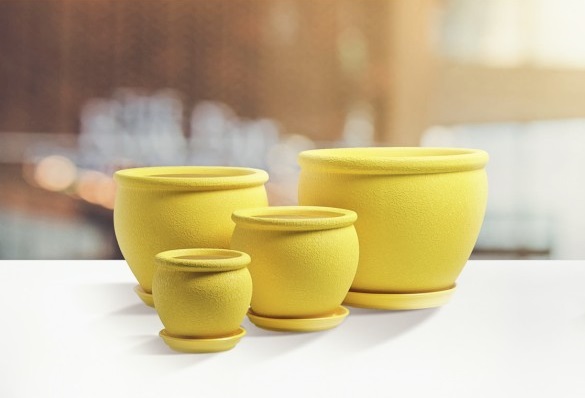
Powder coating is used not only for metal. It is suitable for everything that can withstand the high temperature required for polymerization ― the fusion of the powder mass into a strong film. Glass, clay and even MDF products can be powder coated. In the case of clay, it has its advantages.
Let’s find out which ones in more detail.
The best alternative
People have been making ceramic things for a long time. Different techniques were used for painting: doused with carbon monoxide, painted with organic dyes, covered with silicate glass, enamel. The last method is very widespread, but it has a drawback ― a high baking temperature. Not all types of material can withstand it. The product will quickly dry out and fall apart: the temperature regime at different stages of baking is decisive for the quality of the product. The powder coating is formed at 160 – 180°C, and this is a significant advantage.

Application
Cleaning the surface is extremely important, because there is usually a lot of dust and other debris on ceramic products. Cleaning must be dry, because clay absorbs maximum moisture. Therefore, when it evaporates during baking, many defects will appear. Ceramics do not conduct current, and the loose mass “sticks” precisely due to static electricity. Therefore, the clay object is heated to 200°C so that the powder melts immediately, or a metal spring is placed inside, which conducts current. It is necessary to avoid sudden changes in temperature ― the bowl, tile or vase may crack.
Epoxy, epoxy-polyester, polyurethane paint most often covers ceramics. You can find these on our website. There are many ways to use Lacover, so if you need to paint something, call and get a full consultation.
We will do everything for your best results!
Related Posts


